Why Can Cheap Smart Locks Create More Problems Later?
August 1, 2026
The Appeal of the Budget Option
When you're looking at smart locks online or at a home improvement store in the Murray, Utah area, the price range is striking. You can spend forty dollars or four hundred on what appears to be the same thing: a keyless lock for your door. The cheaper option is tempting, and in many cases it works — at least for a while.
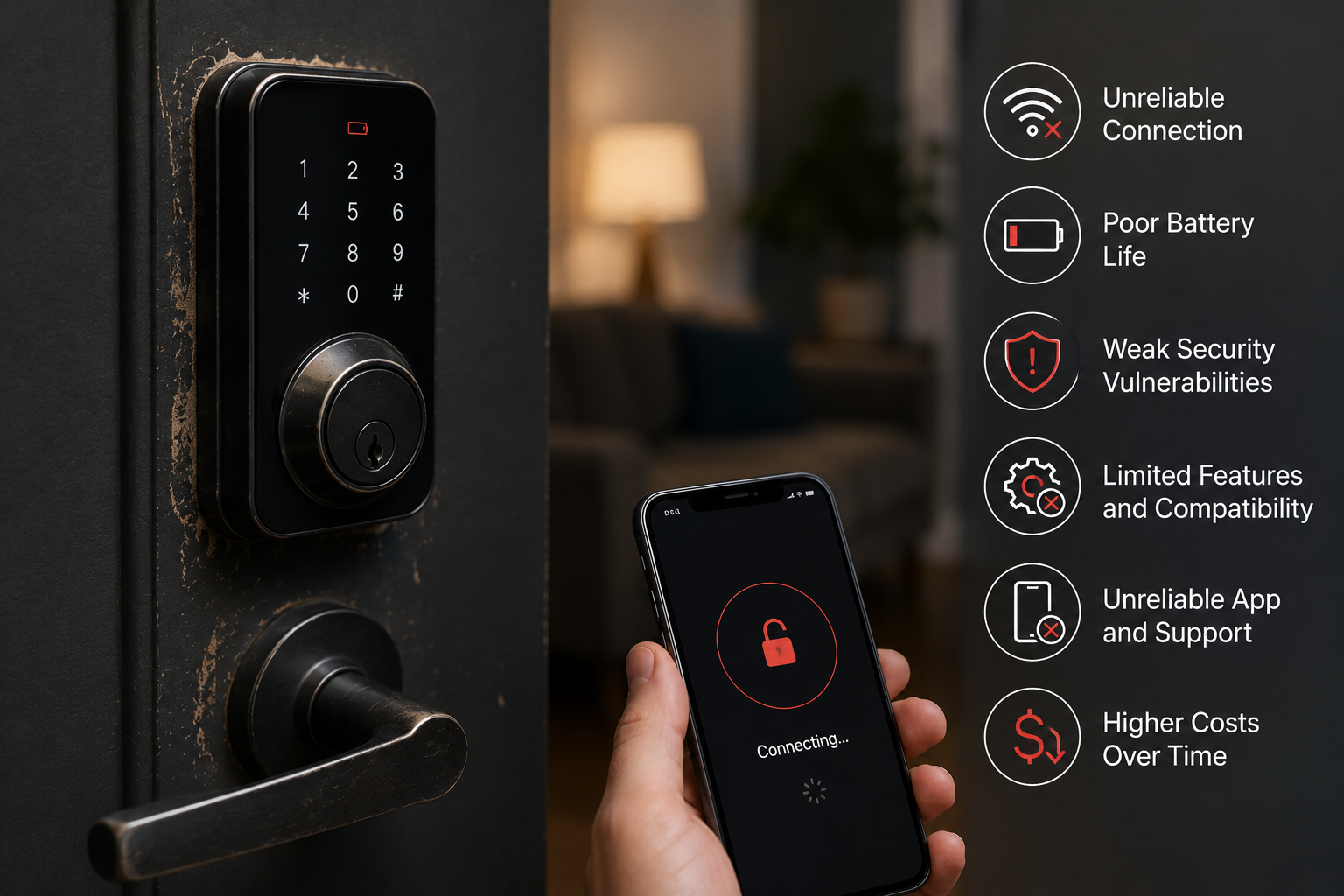
The problems with budget smart locks rarely show up on the day of purchase. They surface six months later, or two years later, in ways that are inconvenient, expensive, or in some cases genuinely dangerous. Understanding where manufacturers cut costs when they build a forty-dollar smart lock helps explain why the savings at the register rarely hold up over time.
Where Budget Manufacturers Cut Corners
Physical Build Quality
Premium smart locks are built from solid brass, reinforced steel, or high-grade zinc alloy with tight manufacturing tolerances. Budget models frequently use lower-grade zinc alloy or plastic housings that look similar in product photos but behave very differently in practice. In Murray, Utah's climate — with hot summers, cold winters, and seasonal moisture — lower-grade materials expand, contract, and corrode in ways that premium materials do not.
Encryption and Communication Security
Smart locks communicate wirelessly — via Bluetooth, Z-Wave, Zigbee, or Wi-Fi. The security of that communication depends entirely on the quality of the encryption implementation. Budget manufacturers frequently use outdated encryption protocols or poorly implemented versions of standard protocols. Security researchers have publicly demonstrated that numerous cheap smart lock models can be unlocked remotely using signal replay attacks — capturing the lock's communication signal and replaying it without ever knowing the access code.
Electronics and Motor Quality
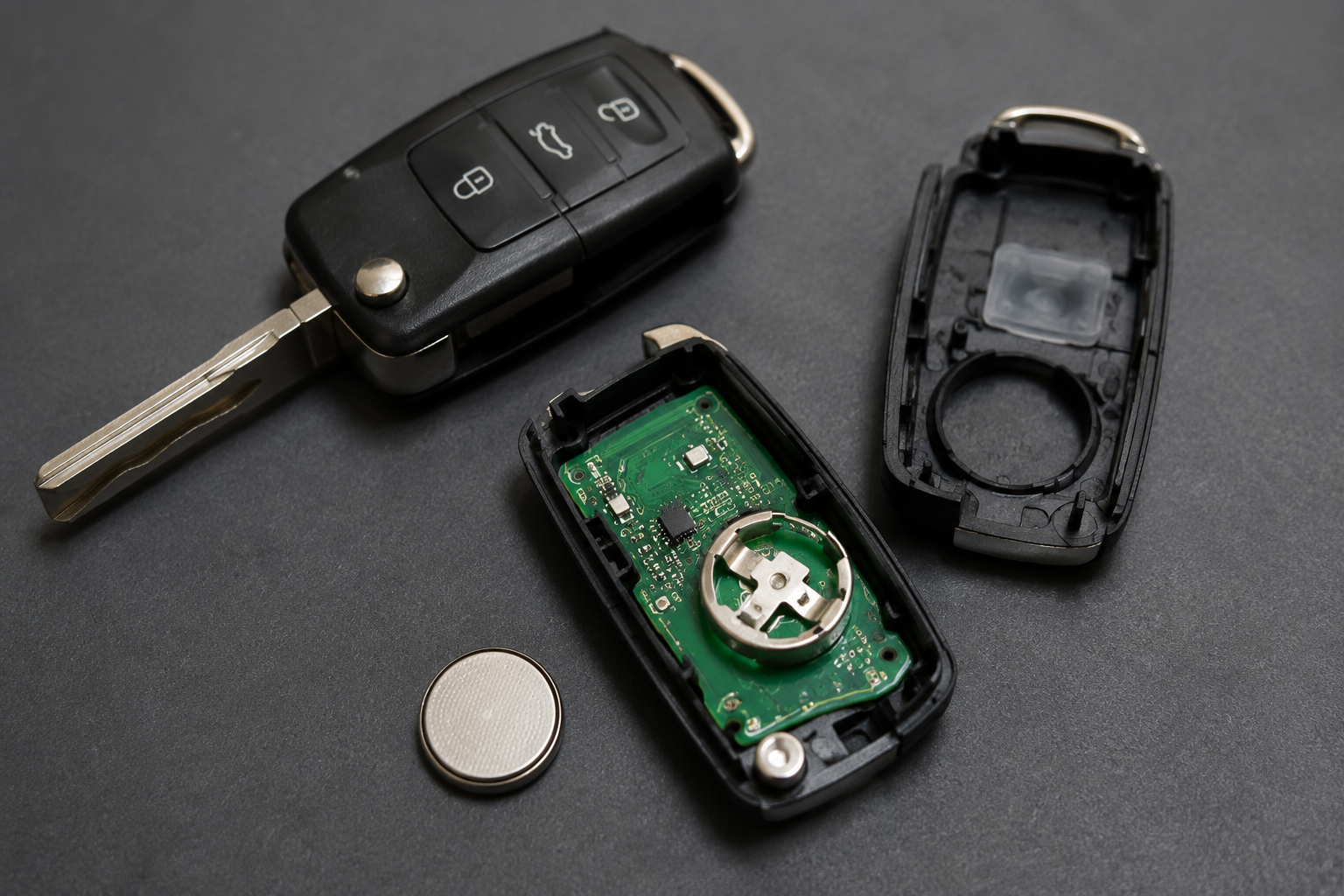
The motor that drives the bolt mechanism, the circuit board that manages communication, and the sensors that detect door position are all areas where budget manufacturers reduce costs significantly. Lower-quality motors wear out faster. Circuit boards with cheaper components are more susceptible to voltage fluctuations and temperature-related failures. These failures often occur without warning and at the worst possible time.
Firmware Support and Software Longevity
This is the risk that most buyers never consider. Every smart lock runs firmware — software embedded in the device that governs its operation. Security vulnerabilities in firmware are discovered regularly, and responsible manufacturers release patches to address them. Budget smart lock manufacturers, particularly smaller brands with short product lifecycles, frequently stop releasing firmware updates within one to two years of a product launch. After that point, any vulnerability discovered remains permanently unpatched in every unit sold.
Real Costs That Emerge Over Time
The hidden financial cost of a cheap smart lock accumulates across several categories. The table below shows how budget and premium options typically compare in total cost of ownership over three years:
| Cost Category | Budget Smart Lock | Premium Smart Lock |
|---|---|---|
| Purchase price | $150–$350 | $150–$350 |
| Battery replacement frequency | Every 4–8 weeks | Every 6–12 months |
| Connectivity issues / resets | Frequent | Rare |
| Expected hardware lifespan | 1–3 years | 5–10 years |
| App / firmware support | 1–2 years | 5+ years |
| Lockout events from electronics failure | Higher risk | Low risk |
What to Look for in a Reliable Smart Lock
Choosing a smart lock that will actually perform over time comes down to a few specific criteria. These are the most important factors to evaluate before purchasing:
- ANSI/BHMA grade rating: Look for Grade 1 (commercial) or Grade 2 (heavy residential). These grades indicate the lock has been independently tested for durability and security.
- End-to-end encryption standard: The product specifications should clearly state AES 128-bit encryption or higher for all wireless communications. If it's not stated, assume it's inadequate.
- Active firmware support history: Check the manufacturer's website for the frequency and recency of firmware updates. A brand that has released no updates in the past 12 months is a concern.
- Smart home compatibility: Verify the lock integrates with the platforms you use — Google Home, Amazon Alexa, Apple HomeKit, or SmartThings — through official, maintained integrations.
- Physical key backup: Any smart lock without a traditional keyed cylinder as a backup is a liability. Electronics fail, and you need a way in when they do.
- Brand reputation and warranty: Established brands — Schlage, Yale, Kwikset's Halo line, and August — have the track record, customer support, and warranty backing to stand behind their products.
Frequently Asked Questions
Are there budget smart locks that are actually good?
A few mid-range options from established brands occasionally offer strong value. The key differentiator is not price alone — it is whether the manufacturer has a credible firmware update history, clear encryption specifications, and a physical key backup. Avoid unfamiliar brands regardless of price.
Can a smart lock be professionally installed even on older doors in Murray, Utah?
Yes. Most standard smart locks are designed for doors with existing deadbolt prep holes (2-1/8-inch bore). A locksmith can assess your door and recommend locks that fit your current setup, or make any modifications needed to accommodate a new lock.
What should I do if my cheap smart lock's app is no longer supported?
Some locks continue to function locally — via keypad or Bluetooth — even after app support ends. However, remote access and firmware updates will no longer be available. The safest course is to replace the lock with a model from a brand that actively maintains its software.
Do smart locks work reliably in extreme temperatures like Murray, Utah winters?
Premium smart locks with weather-resistant ratings (IP65 or higher) are designed to operate reliably in a wide temperature range. Budget models frequently lack weather ratings and can malfunction in sustained cold or when exposed to moisture from snow or rain.
Is it true that smart locks can be hacked more easily than traditional locks?
A cheap smart lock with weak encryption can be more vulnerable than a well-made traditional deadbolt, yes. A premium smart lock from a reputable brand with current firmware is generally comparable in security to a high-quality traditional lock, with the added benefit of audit logs and remote management.
The Smarter Investment in Murray, Utah
A smart lock is only as good as the technology inside it, and technology quality is exactly what separates a forty-dollar lock from a two-hundred-dollar one. The short-term savings from buying cheap frequently evaporate in battery replacements, connectivity resets, lockouts, and — in the worst cases — a security breach that a better lock would have prevented.
If you're in Murray, Utah and considering a smart lock upgrade for your home or business,
Lynn's Lockshop can walk you through the options that actually hold up over time — and install them correctly so they work the way they're supposed to from day one.
Call (801) 699-0511 to get started.