How Do You Know When a Lock Repair Is No Longer Worth It?
September 20, 2026

When Fixing It Stops Making Sense
There is a version of this conversation that happens fairly often in locksmith work. A homeowner or business manager in Murray, Utah calls about a lock that is not working right — stiff, inconsistent, or just acting up — and the first question on their mind is whether it can be repaired or whether they need to replace it entirely. The instinct to repair before replacing is sensible and, in many cases, correct. But there is a point at which repair stops being the economical or practical choice, and knowing where that line is can save you both money and frustration.
This blog walks through the specific conditions that determine whether a lock repair is worth pursuing, and the signals that tell you it is time to move on to a replacement.
What Lock Repair Can and Cannot Fix
Before evaluating whether repair is worth it, it helps to understand what repair actually addresses and where its limits are.
What Repair Addresses Well
Professional lock repair handles a range of specific mechanical problems effectively. Cylinder cleaning and lubrication can restore a lock that has seized due to debris or dried lubricant. Pin replacement can fix a cylinder where individual pins have worn or broken. Strike plate realignment resolves binding caused by door frame shift. Spring replacement restores tension to a bolt or latch mechanism that has become sluggish. For locks in these conditions, repair is genuinely effective and cost-efficient.
What Repair Cannot Reliably Fix
Repair has meaningful limits. It cannot restore structural integrity to a cylinder or lock body that has been physically damaged through forced entry or heavy mechanical stress. It cannot extend the functional life of a lock whose core housing has cracked or deformed. It cannot address security vulnerabilities that are inherent to the lock's design or grade — an underpowered lock that is properly repaired is still an underpowered lock. And it cannot compensate for hardware that has simply reached the end of its useful life.
Four Signals That Repair Is No Longer the Right Answer
The decision between repair and replacement comes down to four key factors. When these conditions are present, replacement is almost always the better investment.
1. The Cost of Repair Approaches the Cost of Replacement
This is the clearest signal. If a locksmith quotes a repair cost that is more than 60 to 70 percent of the cost of a comparable new lock installed, the math favors replacement. A new lock comes with full warranty coverage, known hardware condition, and often an upgrade in security grade — all of which a repaired old lock cannot offer. In Murray, Utah, a basic residential lock replacement runs $100 to $200 installed. If the repair quote is close to that figure, replacement is the more rational choice.
2. The Lock Has Been Repaired Before
A lock that has required professional attention more than once is telling you something about its condition. Locks that fail repeatedly are typically past the point where individual repairs produce lasting results. Each repair addresses the current symptom without addressing the underlying deterioration of the hardware. At some point, the accumulated cost of multiple repairs exceeds the cost of a single replacement that would have been reliable from day one.
3. The Lock No Longer Meets Your Security Needs
Lock standards and security grades exist for a reason. A builder-grade lock that was acceptable when installed ten years ago may not meet the security expectations of a homeowner who has experienced a break-in nearby, or a business in Murray, Utah that has expanded its operations and now stores more valuable equipment. Repairing a lock that is the wrong grade for its current application simply maintains a security gap. Replacement with appropriate hardware solves the functional problem and the security problem simultaneously.
4. The Hardware Is Physically Compromised
Visible cracks in the cylinder housing, a bent bolt, a stripped spindle, or a lock body that has been deformed through attempted forced entry are all signs that the structural integrity of the lock has been compromised. Repairing the functional components of a structurally damaged lock is like patching a cracked foundation. The repair may work temporarily, but the underlying damage will continue to affect performance and security.
A Decision Framework for Repair vs. Replacement
The following table provides a practical framework for evaluating your specific situation. Work through these conditions against your lock's current state.
| Condition | Recommended Action |
|---|---|
| Lock is stiff but undamaged and under 8 years old | Repair — cleaning and lubrication likely sufficient |
| Lock is intermittent but hardware is structurally sound | Repair — cylinder service or pin replacement |
| Repair cost exceeds 65% of replacement cost | Replace — better value and improved warranty |
| Lock has been repaired once already in the past 2 years | Replace — recurring failure indicates deeper wear |
| Lock grade is inadequate for its current application | Replace — repair does not address the security gap |
| Lock housing, bolt, or body is visibly damaged | Replace — structural damage limits repair effectiveness |
| Lock is part of a master key system needing reconfiguration | Evaluate with a locksmith — system-level decision |
The Hidden Cost of Keeping a Lock Too Long in Murray, Utah
There is an indirect cost to deferring a lock replacement that is easy to overlook. A lock that is borderline — functioning but marginal — may be providing less resistance to forced entry than its appearance suggests. In Murray, Utah, as in most communities, opportunistic burglars typically look for the path of least resistance. A door that appears secured but has a worn deadbolt, a misaligned strike plate, or a failing cylinder offers less actual protection than a properly functioning lock of the same grade.
The cost of keeping a declining lock in place is not just the eventual repair or replacement bill — it is the period during which your door appears secure but offers reduced protection. For that reason, locks that are in the replacement-decision zone are worth acting on sooner rather than later.
Frequently Asked Questions
Is there a standard lifespan I should use as a guide for when to replace a lock?
ANSI Grade 1 commercial locks are rated for 250,000 operational cycles, which translates to roughly 10 to 15 years of heavy daily use. Grade 2 residential locks are rated for 125,000 cycles — roughly 7 to 10 years. Builder-grade locks have no standard rating and typically underperform both. These are general guides, not firm rules; actual condition matters more than age alone.
Can a locksmith tell me definitively whether my lock is worth repairing?
Yes. A qualified locksmith can assess the cylinder condition, bolt mechanism integrity, housing structure, and alignment before recommending a path forward. This evaluation is typically included in the service call cost and should include a clear explanation of what the repair covers and what it does not.
If I replace one lock, should I replace all of them at the same time?
Not necessarily. Replace locks based on condition, not calendar dates. However, if multiple locks in a property are similar in age and showing similar wear, replacing them together allows you to key them alike, reduces the number of service calls needed, and may make you eligible for a volume discount on parts.
Does homeowner's insurance cover lock replacement after an attempted break-in?
Many homeowner's insurance policies cover the cost of lock repair or replacement following a break-in or attempted break-in, though deductibles often make small claims impractical. Review your policy terms or contact your insurer directly to confirm what is covered under your specific plan.
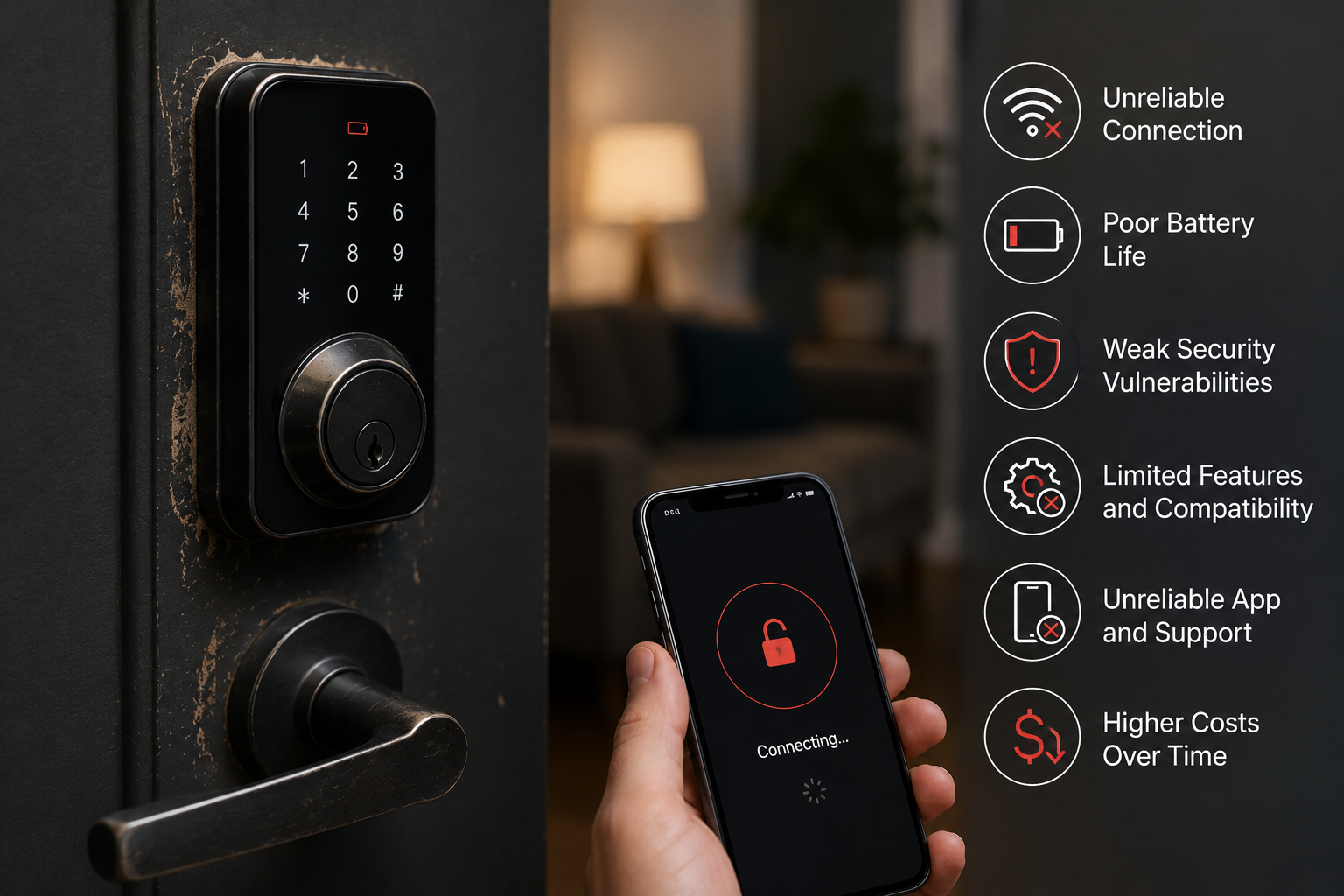
Are smart locks a practical replacement option for a worn traditional deadbolt?
Smart locks are a viable replacement option for most standard door preparations and offer the added benefit of keyless entry, remote access, and access logs. The decision depends on your door's existing hardware cutouts, your interest in managing digital access, and your budget. A locksmith can confirm compatibility before you purchase.
Make the Right Call for Your Lock
Repair is often the right answer, but not always. The key is evaluating repair decisions the same way you would any maintenance investment: is the cost justified by the benefit, and does the repair actually solve the underlying problem? When the answer to either question is no, replacement is not a concession — it is the smarter financial and security decision.
For homeowners and businesses in Murray, Utah trying to make this call, a straightforward assessment from a trusted locksmith is the fastest path to clarity. Lynn's Lockshop provides honest evaluations of lock condition and repair viability without pushing unnecessary replacements. Call (801) 699-0511 to schedule an assessment.