Why Do Ignition Problems Sometimes Look Like Dead Batteries?
September 29, 2026
When You're Certain It's the Battery — And You're Wrong
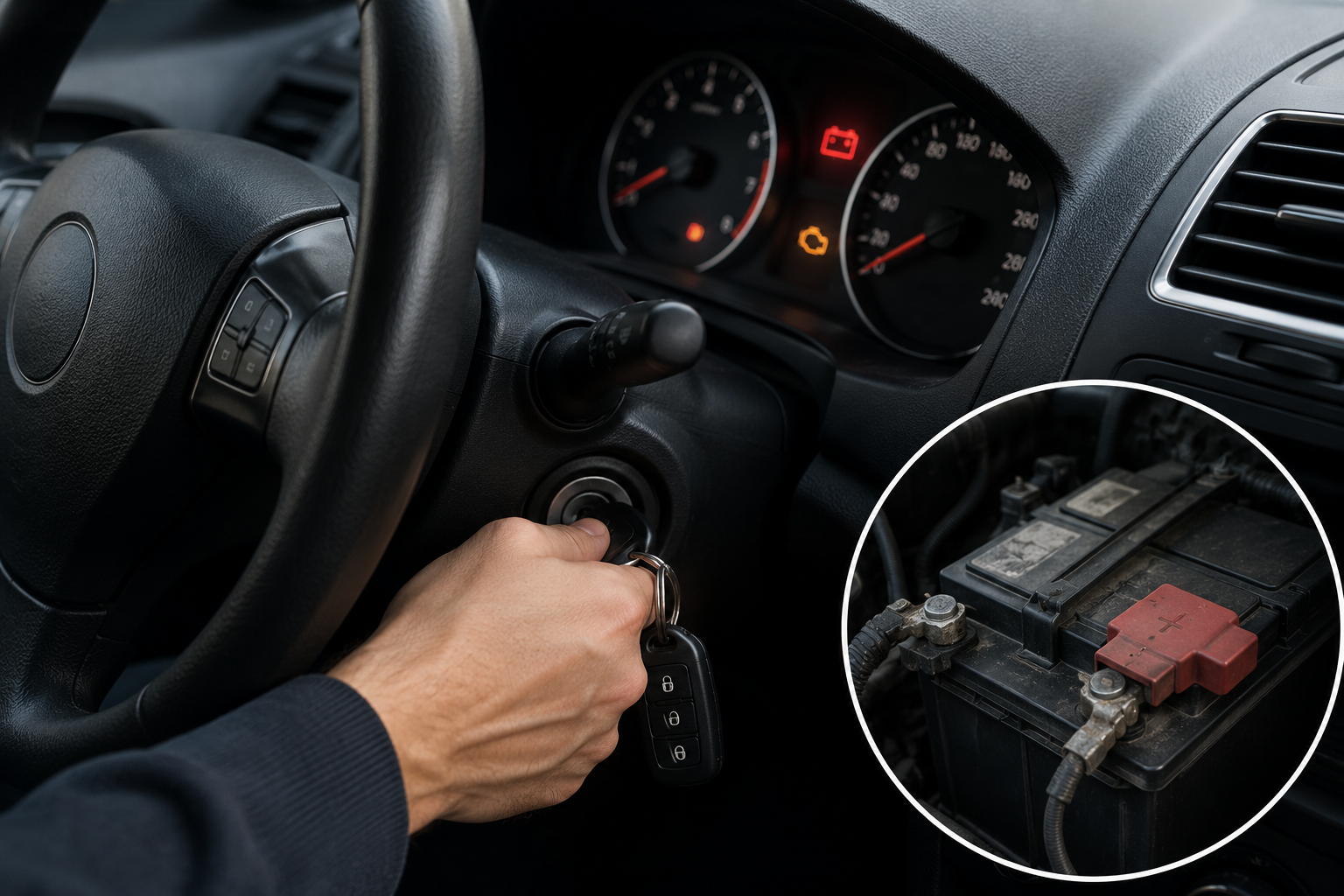
You sit down, turn the key (or press the button), and nothing happens. Maybe the dashboard lights flicker. Maybe there's a click. Maybe there's complete silence. Your first instinct is the battery, and it's a reasonable one — most people have experienced a dead battery at some point, and the symptom profile feels familiar.
But for a meaningful number of drivers in Murray, Utah, what feels exactly like a dead battery is actually an
ignition problem. When the battery gets replaced and the car still won't start, the frustration is compounded by the fact that you've now spent money and time on the wrong fix. Understanding why these two problems overlap so heavily is the first step toward getting the right answer the first time.
Why the Symptoms Overlap
The confusion exists because the ignition switch and the battery share the same job: delivering power to the starter motor and the vehicle's electrical systems. When either one fails, the result is the same — the car does not start. The difference is in the mechanism of that failure.
A dead battery has no power to deliver. A failing ignition switch has power available but fails to route it correctly to where it needs to go. From the driver's seat, these two scenarios are nearly indistinguishable without testing.
Reading the Symptoms: A Diagnostic Guide
The sounds and behaviors your car exhibits when you try to start it contain useful diagnostic information. The following table maps specific symptoms to their most likely causes and helps separate battery-related issues from ignition-related ones:
| Symptom | Most Likely Cause | Key Signal |
|---|---|---|
| Rapid clicking, fast repeating | Dead or very weak battery | Battery failure |
| Single loud click, then silence | Starter solenoid engaging, not cranking | Weak battery or failing starter |
| Complete silence, no clicks | Needs testing to distinguish | Needs testing to distinguish |
| Dashboard lights on, won't crank | Insufficient battery for starter or ignition switch not completing circuit | Ambiguous — test both |
| Works sometimes, fails other times | Intermittent ignition switch fault | Ignition switch failure |
| Starts, then stalls immediately | Ignition switch losing contact under vibration | Ignition switch failure |
| Accessories work, engine won't fire | Ignition switch not completing the starter circuit | Ignition switch failure |
The most important pattern to understand is intermittent failure. A dead battery is a consistent failure — the car does not start, full stop. If your vehicle starts fine sometimes and refuses other times with no apparent pattern, the battery is almost never the cause. Intermittent failures point directly to the ignition switch or another switching component in the start circuit.
How to Test Before You Replace Anything
Before replacing parts in Murray, Utah's cold mornings or summer heat, run through this logical sequence to narrow down the cause:
- Test the battery voltage: Use a voltmeter or take the battery to any auto parts store for a free load test. A healthy battery reads 12.6 volts or higher at rest. Below 12.2 volts indicates significant weakness. If the battery tests healthy, the problem is elsewhere.
- Check the battery terminals: Corroded or loosely connected terminals create resistance that mimics a dead battery. Disconnect both terminals, clean them with a wire brush, reconnect firmly, and retest before drawing any further conclusions.
- Attempt a jump-start: If the vehicle starts immediately with a jump, the battery is the primary suspect. If the vehicle still will not start after a full jump-start attempt, the battery is likely not the root cause.
- Try the spare key or fob: On vehicles with transponder keys or push-to-start systems, a failing key fob can prevent starting entirely. Swap in a spare and retest before assuming any deeper fault.
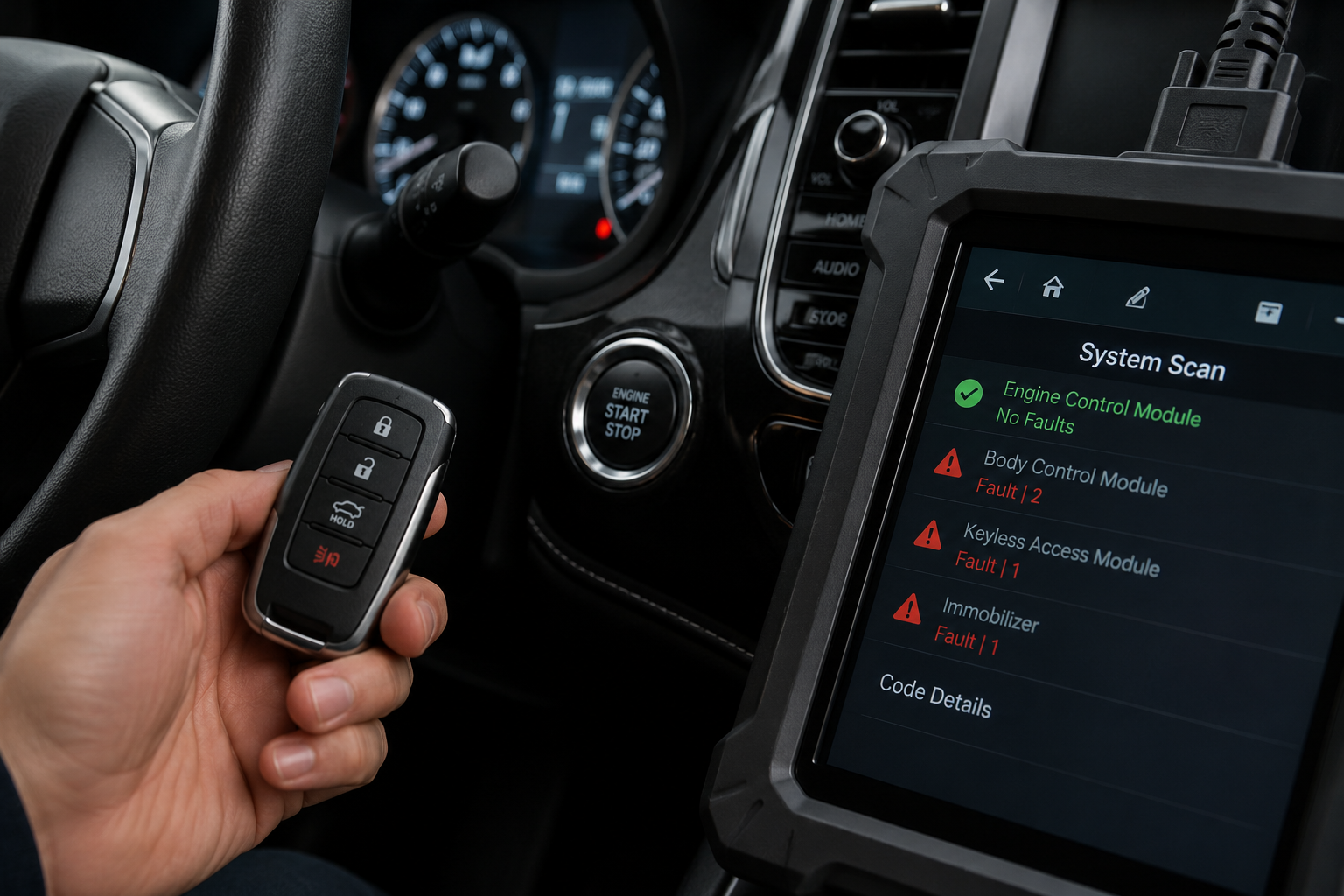
- Scan for fault codes: An OBD-II scanner can reveal stored codes related to the ignition switch, BCM, or immobilizer. Ignition switch failures often generate specific codes that point directly to the component, eliminating guesswork.
What Ignition Switch Failure Actually Looks Like
Because ignition switch problems are so frequently misattributed to the battery, it's worth describing exactly what they tend to look like in real-world use. The characteristics that should raise suspicion about the ignition switch specifically include:
- The car starts fine with a jump but the jump-start needs to be repeated within a few days — the battery tests healthy but the switch is preventing full charge from the alternator circuit.
- The steering wheel lock engages randomly or the ignition feels rough and resistant to turning.
- Power accessories — windows, radio, interior lights — fail intermittently when the key is in the 'accessory' position.
- The vehicle stalls shortly after starting, particularly when going over bumps, suggesting the switch is losing contact under minor vibration.
- The engine cranks but does not fire, and a scan tool reveals no spark signal — the ignition switch is not completing the ignition circuit even though the starter is receiving power.
Frequently Asked Questions
Can I drive my car with a failing ignition switch for a while before fixing it?
It is risky to do so. A failing ignition switch can cause the engine to stall unexpectedly while driving, which creates a safety hazard — particularly at highway speeds or in traffic. It can also leave you stranded in an inconvenient location. Address it promptly.
Why did replacing the battery seem to fix my car for a few days before the problem returned?
This pattern is a strong indicator that the battery was not the root cause. A fresh battery can temporarily compensate for resistance in the ignition circuit by providing higher initial voltage. As the battery charges down to normal levels, the underlying ignition fault reasserts itself. The battery helped briefly; it was not the fix.
Can a bad ignition switch drain my car battery?
Yes. A failing ignition switch that does not fully open the circuit in the 'off' position can create a parasitic draw — a small continuous current that slowly depletes the battery overnight or over a few days. This is one reason why an ignition problem can look like a recurring dead battery.
Is ignition switch replacement something a locksmith can do, or does it require a dealership?
Most ignition switch and ignition cylinder replacements are within the scope of a qualified automotive locksmith. This includes both the electrical switch component and the mechanical lock cylinder. A local locksmith is almost always faster and less expensive than a dealership for this repair.
If my ignition lock cylinder is worn out, does the switch need to be replaced too?
Not necessarily. The ignition lock cylinder (the mechanical part the key inserts into) and the ignition switch (the electrical component behind it) are separate components that can fail independently. A locksmith can assess which component is at fault and replace only what is needed.
Getting the Right Diagnosis in Murray, Utah
Fixing the wrong thing is expensive. A replacement battery does nothing for an ignition switch fault, and ignoring the real problem means you will be back in the same situation — possibly at a worse time. The symptom overlap between these two issues is real, but it is also navigable with the right testing approach.
For drivers throughout Murray, Utah who aren't sure what they're dealing with, the automotive team at
Lynn's Lockshop can help you sort through the symptoms and get to the actual cause.
Call (801) 699-0511 and get a clear answer before spending money on guesses.